Articles

Stay up-to-date on all we have in store, what we're growing, and our latest sales and deals!

Search »

Companion Planting


Some things just go together; peanut butter and jelly, March and basketball, nasturtiums and cucumbers? Over the winter I've been doing a lot of reading on companion plantings. These are two or more kinds of plants when situated together are mutually beneficial. In planning my vegetable garden I may as well try to plant things that make each other happy.

The most famous companion planting is the Three Sisters (corn, beans and squash) planted together in Meso-American societies. The beans fixed nitrogen, thus improving the soil for the corn. The corn provided shade and a trellis for the squash and beans, and the prickly squash vines deterred raccoons and other pests from eating the corncobs.Companion plantings usually deter pests, improve yield, or provide another physical benefit, such as shade or structural support.

Scent has a lot to do with it. Some of the literature suggests that strong odors disorient insects preventing them from finding crops they like to munch on. The pungent odor of garlic or onions deters lots of pests. Aromatic herbs like lavender, mint, sage, and catmint, are also good protection. Some herbs like thyme, chamomile and savory attract predatory insects that hunt destructive garden pests.

Some companions act as trap plants. Collards planted near cabbages and broccoli will attract diamondback cabbage worms, usually so destructive to those crops. Eggplants will trap Colorado potato beetles, leaving the potatoes alone. These trap plants can be sprayed, leaving your desirable plants chemical-free.

One of my favorite annuals, nasturtiums, not only has edible spicy flowers and blooms well into the fall, but also deters whiteflies, squash bugs and cucumber beetles. It is a great one to plant around tomatoes, cabbage and cucumbers.

Marigolds also deserve a place in the vegetable garden, especially pungent ones. Their scent deters bean beetles and fleas, and their roots repel nematodes.

Tomatoes have lots of friends. Basil when planted with tomatoes, improves the flavor and vigor of each. Lettuces go well with tomatoes, as the larger tomato plants will shade heat-sensitive lettuce, prolonging its cutting season.

There are also groups of plants that shouldn't be planted together as they inhibit growth or attract detrimental insects. Keep tomatoes and corn apart, as the worms that attack each are similar.

Potatoes are more succeptible to potato blight when near tomatoes. Don't plant members of the cabbage or nightshade families near your strawberry patch as all groups are attacked by verticillium wilt. Onions stunt the growth of peas and beans.

While all of the scientific reasoning behind companion planting hasn't been totally worked out, there was a cockamamie theory that found favor in the middle of the 20th century. Different plants were ground up and put into solution. The crystal structures formed by heating and cooling different plant solutions together were judged to be complementary or adversarial. Don't forget, people once tried to make gold from lead, too.

Google "companion plantings" and you'll get pages of charts of plants that do well together. If you are new to gardening, or an experienced hand, some of these combos are worth a try.


Nearby Adventures


I'll confess that I have never been away from southern Lancaster County for more than 23 consecutive days. That may dim my worldview, but I wonder how many areas are blessed with as many horticultural resources as we are.

Of course we have three former duPont family gardens that provide both viewing and educational opportunities. If your mind stalled after Longwood and Winterthur let me introduce you to the most recent one to open to the public.

Mt. Cuba is just down route 41 south of Hockessin, Delaware. Over the years they made a commitment to study and introduce plants that were native to the eastern piedmont. If your geography vocabulary needs help, the eastern piedmont is that area west of the Atlantic coastal plain and before the spine of the Appalachian Mountains.

Many of the native plant selections now in the market place traveled through Mt. Cuba. While Winterthur, in the spring, shines with exotic bulbs and azaleas/rhododendrons Mt. Cuba offers a great array of spring flowering ephemerals and meadow plantings later in the summer.

Sunday, April 26 they offer free tours of their spring wonders. If something man put together is not your cup of tea, approach the Susquehanna River on route 372 and head north on River Road. There are several great spots there.

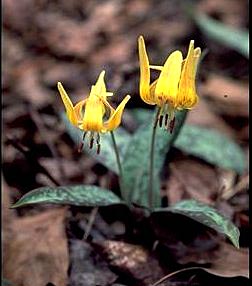
Last Sunday I spent much of the day with binoculars strapped around my neck and back. I saw some great birds but the high point was a stop at Shenk's Ferry. The woods were carpeted with white dicentra (Dutchman's Britches), the bluebells and white trillium were starting to bloom and I found a beautiful patch of trout lilies. Their information claims the site is home to about 60 native wildflowers during the season.

Several days ago I was informed about an interesting home garden tour. The James Buchanan Foundation sponsors it. In a different twist, they located 50 gardens scattered throughout the county. Each garden selected agreed to host the public on two days sometime during the gardening season. I suspect that most of the open dates will occur in the spring. Call Wheatland for details.

The Lancaster County Conservancy has acquired over 20 natural areas within the county. In an effort to encourage visitation to these areas, they, in cooperation with the Lancaster County Bird Club, are sponsoring a bird-a-thon.

In short, members of the bird club will lead tours into some of these areas on May 16. Like any whatever-thon the goal of course is to raise funds for the conservancy. but it is a wonderful opportunity to experience some areas many of us never knew existed. For details, contact the Conservancy.

For those of you who are into more traditional flowers, Penn State University, in cooperation with the Master Gardeners of Lancaster, run extensive field trials near Landisville. They are open to the public at no charge. The trials are one of the best in the country. They also run a home gardeners tour sometime in July, I think. The master gardeners can be reached at 394-6851.

It would be easy to ramble on, but maybe I should think about my worldview and plot a longer absence, but then again why pass up the myriad local opportunities.


Gardening for Butterflies


So you want butterflies in your yard. You have two choices. You can borrow those in the neighborhood or you can make your own. I suggest the latter as there is some concern about the health of the general insect population, which includes butterflies and moths.

The borrowers need but a few nectar-strong plants. A butterfly bush or two and some flat-headed or composite flowers are drawing cards that bring what is in the neighborhood. These plants, in general, are valueless in nature's scheme of making more butterflies.

To get more butterflies you need worms, which immediately bring visions of destroyed plants. Occasionally that can be true, but generally their presence is seldom seen. If you have a plant group that is being devoured, increase the planting, move it to a less visible spot or as one writer suggests, pick a few worms so that the others have plenty to eat while limiting the damage.

I recently read that there are about 11,500 different moths and butterflies in this country. Add to that the claim that a typical oak tree in your yard can make more than 500 of these species happy and you begin to fathom the diversity that is out there and that our encouragement has few disadvantages.

In most cases, the particular moth or butterfly has quite specific larvae (worm) needs. Yet, I saw a list of the common native trees in our landscape and all attract over 100 different species.

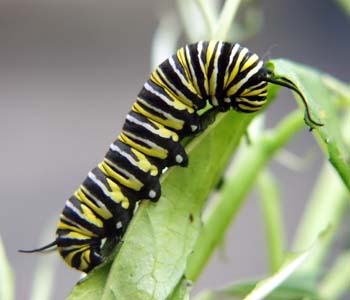
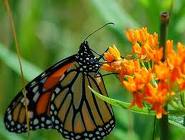
Getting more specific, one of the easiest and most common butterflies to make in our landscapes is the monarch. It is also one of the few that migrate long distances in the course of a year. They favor any plant in the milkweed family. If you are trying to bring your garden into tune with native plants, this is a good place to start.

Another group of common butterflies is the swallowtails. Each of these has a specific favored host. One, the black swallowtail loves your carrot patch and a number of related herbs. In the past I have seen lots of their caterpillars (that sounds a lot better than worms) in the garden with little damage.

I could go on but I want to return to the idea of the oak tree with over 500 worm (I'm sorry, caterpillar) possibilities and the fact that I have never seen damage to the oaks on my property.

If nature is in balance, there are other insects and birds that regulate the populations of any insect out there. Have you ever laid under a large oak tree and watched the bird activity near the top of the tree? It is fascinating.

In the recent past I have written about the real or perceived decline of insects and birds. Maybe it is time we reverse that trend and increase the number of native plants in our landscape.

Don't call the bulldozer or pick up the chainsaw to attack what you have. Just add a few natives when you add or replace. My large shrub border is now about half and half and I haven't given up a thing in visual appeal - just gained a few more insects and the birds that follow them.


April Resolutions


Someone said to me the other week, "You work at a greenhouse, you must have a fabulous garden!" Sadly my gardens sometimes are akin to the shoemaker's children. Shoeless and unmulched. This year I'm turning over a new leaf. I propose a list of April Resolutions to guide my gardening endeavors this year.

1. Don't cut off your daffodil (or other bulb) foliage before it turns yellow and withers. This is very important to allow the plants to save up enough nutrients to produce next year's flowers. As tough as it is, leave it alone.

2. Mark your irises and daylilies for flower color or variety so that in the fall if you need to divide them you know who is where. This has prevented me from dividing mine the last 2 years and now they REALLY need it.

3. Look at the weather forecast before planting. If you see unseasonable lows or 10 days of no rain or hold off a bit. Covering or replacing annuals planted in haste is a pain.

4. Unless you have lots of friends, or don't want to keep the ones you have, only plant a few tomatoes and zucchini. Really 1 or 2 zucchini plants should be enough for anyone.

5. Mulch the garden to keep the weeds down. This should be a no-brainer, but I'm always too stingy with the mulch and pay for it later. A good 3+inches is good.

6. Prune shrubs and trees at the time of transplant to help get the roots established. Be ruthless. The root-to-shoot ratio should favor the roots when planting. If not, the plant will lose water through the excess leaves and the roots won't be able to keep up. Have you ever noticed a new tree or shrub looking wilty soon after it was planted? That's why. Do it a favor and give it a haircut. Don't worry it will grow back.

7. Same for perennials. A wise gardener once told me to cut off the flowers when planting so the poor thing wasn't trying to do two things at once. As much as it kills us to behead our new babies, cut them off and put the blossoms in a vase to enjoy.

8. Plant perennials in the fall. I know dad and I are starting to sound like broken records, but really it's much better for good root establishment. Falling air temperatures and the still-warm soil make for happy plants.

I usually don't make New Year's resolutions. Who wants to go on a diet? But this April list are things that are relatively easy, will make your gardening experience much better, and you can still eat chocolate.


Even the President is Doing It


The president is digging up the White House lawn to plant a vegetable garden. Some researcher claims that a small plot (I forget how big) can save you $2150 in grocery costs. I've read and heard so many reports exhorting the virtues of planting a vegetable garden that I quit paying attention.

What I haven't found is a report that includes the W words like work, weeds or worms. Let's face it, flower gardens are much easier. We usually mulch them to keep the weeds down and few insects or diseases bother most of our flowers. In the vegetable garden one is constantly swinging the hoe and each swing brings new weed seeds to the surface. Insects and disease also seem more prevalent.

Last year with a minimum of neglect and a couple of weeks on vacation, much of my vegetable garden could have provided the lead article and the cover photo for Big Weeds Weekly. if there was such a publication.

If you are a veteran vegetable gardener ignore my mumblings. If you are new and excited I'll offer some advice. Start slow or small and don't believe everything the media or the seed catalogs claim. Of course, what follows is the gospel truth.

Lettuce (seeds or plants) and spinach (seed) are easy and are great if planted before April 15 or after the first week in August. In the heat of summer they want to flower and develop a rather bitter taste.

Peas, beans and onions are also easy. Peas (seed) can go in the ground now and I have had some success with August plantings for a fall treat. In several weeks, string beans (seed) can go in and you can make several plantings before August 1 if you wish. For onions, buy a few onion sets.For tomatoes, peppers and eggplants (all transplants) wait for warmer temperatures. I might gamble with tomatoes toward the end of April but would wait for a week or so into May for the other two. If you are averse to spraying, look for disease resistant varieties.

Cabbage (anytime), cauliflower, broccoli and Brussels sprouts (all transplants) are best grown as fall crops but you can often have success in the spring. You will have more worms in the fall but a word of spring caution is never to plant when the yellow mustard is blooming. There is a root maggot that hatches about then and will devastate new plantings of cole crops.

All I can say about radishes and, especially, carrots is that we don't have the climate or soil to do them well.

Melons, cucumbers, squash and pumpkins (seeds or transplants) do well for a while but will eventually lose the battle to fungus diseases without a bit of chemical help, especially in wet years.

Potatoes (small seed potatoes) and sweet corn (seed) will both thrive on lots of fertilizer. Watch out for potato bugs. The best spray-free, worm-free sweet corn is harvested in the second half of July. Earlier faces a small, first generation of worms. Later, you face a monster second generation of worms.

I ponder applying for a grant to hit $2200 or seeking the job of White House vegetable gardener, but I guess I will just plug away trying to continue the tradition of not buying seasonal vegetables and stocking the freezer with peas, beans, corn and the like.

Next page