Articles

Stay up-to-date on all we have in store, what we're growing, and our latest sales and deals!

Search »

Gardening for Birds


I confess that as my ability to cover long distances quickly on foot declines, I am reviving another childhood interest; bird watching. To bring birds to the garden we need to provide food, shelter (protection) and water.

As you can guess, my gardens have grown with the vigor of an addict. Interestingly, some of the plantings and other naturally occurring plants on the farm seem to thrill the birds.

Recent centers of attention were the dogwood and green ash trees as well as a general section of berried plants on a bank near the house.

About a week ago, I went to start an irrigation pump and noticed a lot of bird activity in a distant dogwood tree. Not having binoculars with me, I was not sure which of several birds I was seeing. However, I could see the tree was loaded with shiny red berries.

Being busy, it was a half hour until I returned with the stronger eyes. The tree was deserted and even with the binoculars I could spot but a sole berry. Returning toward my house I caught up with the marauders. A large band of migrating robins were now removing the berries from the dogwoods in my yard.

On a recent October Sunday I watched a green ash tree with my binoculars. A modest amount of time yielded almost ten species feasting on the plentiful, but hardly ornamental, seeds of that tree.

Finally, recently there have been evenings of great activity around a clump of berry bushes near my house. Several chokecherries dominate that area. The birds were there, but the berries stayed. I am told that several freezes are necessary before they are palatable and most likely will remain to be food for the spring migration.

I mentioned a few plants from the long list that attract birds. The other obvious way to attract birds is with feeders. I currently am a winter feeder but am starting to extend the season.

Shelter and protection are also vital to attracting birds. Cats on the ground and small hawks in the air are constant threats to songbirds. Place your feeders so that the birds can dart to cover almost instantly when needed. It will be.

Evergreens and brush piles of thick bushes offer the needed protection. They also offer nesting sites that are important to the birds and offer another dimension of enjoyment for us.

The importance of water was driven home on another trip to the irrigation pump. I spied a steady procession of birds at the edge of the creek taking a bath. That cost me at least fifteen minutes.

Birdbaths, like the one Santa brought me last year, are also very effective if cleaned regularly. If you can arrange dripping water the results will multiply.

Now in the garden I have more friends. I look at the birds as well as the plants. This is getting too long to ramble on about others: frogs, toads, butterflies and other insects. Ah well!


Changing Trends in Greenhouse Pots


Do you cringe when you open the garage or shed door and see that pile of empty pots leftover from this year's gardening season? You think about the dumpster only to be troubled by the fact that they might live in the landfill forever. Are there any options?

Plastic pots emerged some fifty years ago and revolutionized the greenhouse industry. You had an inexpensive, durable, lightweight container that easily held together during the growing season and withstood the rigors of shipping.

I date to the time when you left the greenhouse with a handful of bare-root plants wrapped in newspaper or dragging a heavy open wooden flat that was expected to be returned. We might have even paid a deposit on the wooden trays.

Interestingly, a few years ahead of plastic, fiber pots were first used. The hype was that you could plant the pot and all. Today they still have enough problems that they remain just a small part of the industry.

There was/is a conflict between their durability in the greenhouse and their rapid breakdown when planted. If they held up well in the greenhouse they were slow to breakdown in the ground. A second problem I have noticed is that if the pot is planted and not totally covered it acts as a wick to pull moisture away from the plant.

The difficulty fabricating small pots and the cost are also limiting factors. That said, the research is red-hot looking for alternatives to plastic. In the last week I read three articles on the subject. The research targets were newspaper waste, cow poop and chicken feathers.

A more environmentally friendly pot may/will be in the future, but plastic will still dominate the immediate future.

One interesting fact is that the dark colored pots are generally made from plastic waste or recycled material. White and other bright colored pots require fresh resins made from oil stocks to mold. I guess that is one of the reasons some in the industry are pushing fancy pots as a way to charge more for the plant.

I recently discovered that brown pots were one and a half times as expensive as identical black pots.

If you are operating with a dumpster in Lancaster County and your pots land there they will/should find their way to the burn to energy unit in the northern part of the county. There, they will be burned at very high temperatures, which greatly reduces emissions and the space required in the landfill and produce a bit of electricity to boot.

Another, perhaps better, option would be to ask your plant supplier if they would take back their pots after you empty them. My guess is that even today's light weight plastic pots would hold up for three or four trips from the greenhouse to your home and back.

A brief chlorine bath for sterilization is cost competitive with buying new pots in today's oil/resin market. The environment would like that, too.


Bamboo


Bamboo is a terrible invasive garden thug. Bamboo is a well-behaved clumper that is a great addition to any garden especially if you are looking for the Oriental look. Confused? Just pick the one that the Pandas are eating.

Maybe it would be easier to realize that often common names are misleading or inconclusive. If you wish to be safe in a plant selection, a bit of attention to the Latin name is very helpful.

You don't need to be an expert with Latin names, but if you are searching for a plant you read about, the Latin name is the surest route to finding it.

Meanwhile, back to the bamboo. I have a fleet of lawn mowers that wish the only abuse they got was from mowing. Therefore, I make frequent trips to the repair shop. One way I go I pass a bamboo jungle along a stream bank.

If I take the alternate route I pass a maze of bamboo perched high on a dry bank. Careful study would suggest that the one along the stream is slightly more prolific than the one on the dry bank.

Longwood Gardens grows this one in a bed with a cement bottom and walls. Enough said about any bamboo starting with the Latin Phyllostachys.

On the other hand, there are well-behaved clumping bamboos beginning with the Latin name Fargesia. This one likes sun to part shade and organic soils with good drainage. That's rather easy in this location.

If you spot one in a garden center with one of those fancy picture tags on it I suspect that it will overstate the height of the finished plant. I am familiar with one that said 15 to 18 feet but is barely nine feet after five years.

Until a few years ago, the clumping bamboo was priced well above my budget. The reason was that they are difficult to divide or propagate by conventional methods.

That changed when a company in Europe mastered production by tissue culture. Tissue culture is a process where you can take a small bit of plant tissue, in sterile conditions with defined growth medium, and produce literally hundreds of small plants.

Tissue culture won't toss bamboo into the bargain bin, but has greatly increased its availability and reduced its price to a fraction of what it was several years ago.

Fragesia has one interesting quirk. When it blooms, it dies. In China, there have been several years with lots of plants blooming that threatened the Pandas with starvation.

I have heard estimates of the plant age for bloom ranging anywhere from seven to fifty years. In a recent Longwood class the instructor claimed he planted one, which bloomed the following year and died. I recently planted some and I hope they don't bloom for a long time.

In conclusion, there is interesting bamboo now available for the garden. However, if your neighbor offers you a starter plant don't take it without buying lots of cement first.


Changing Garden Conditions


It happens to all of us sooner or later. A tree grows and our previously sun perennial bed is not blooming well, and stretched. Or a tree falls and our shade plants are scorched and dying.

Someone mentioned to me a few months ago that she has finally embraced her garden conditions after trying to grow purple coneflowers in full shade for many years. She told me "There comes a time where you have to admit the truth".

In my garden I'm looking forward to this. A Norway maple and a flowering dogwood are much taller now than they were when my grandmother planted phlox, asters, goldenrod, Helianthus and hardy mums in a bed outside my kitchen window. This weekend I'm digging them up and moving them to a sunnier berm garden.

A few notes about Norway maples, or any maple for that matter. One, they have shallow roots, so whatever you plant under or near them should be drought tolerant to begin with, but must be watered until established. Dad's rule of "water when planting and then leave alone" must be relaxed under maples.

Two, they have flat leaves that when they fall in the autumn stick together and do not curl and decompose like oak leaves. So if you like to mulch with your leaves, maples must first be raked and shredded before mulching.

Back to my new shade garden. I've been dreaming all summer of what I'd put in my new bed. There are so many options and I'm not sure I've made up my mind yet.

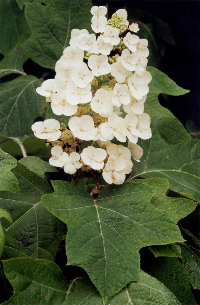
I know I want to put in an oak-leaf hydrangea in the back. Not only does it give fragrant white-turning-to-pink flowers in the summer, but it has a great red fall-color as well as attractive exfoliating bark for winter interest. Plus it's native. How can you beat that combination! In the front of the bed, I'm still deciding.

On my short list are sedges, epimediums, coral bells, Campanulas and perennial geraniums. Geranium 'Jolly Bee' in my parents garden has been blooming steadily since June. I've also recently fallen in love with Begonia grandis, a fall-blooming hardy begonia that gets 2-3 feet tall with pink flowers.

But I think that is the point. Fall in love with something new that is suited to the garden you have today. Know your soil moisture conditions and what time of day you have sun. Look at public gardens or friends backyards to find out what you like. Most of all, experiment. And if your find doesn't thrive, move it somewhere else, or plant a tree and wait.


Fall Annual Maintenance


Perhaps the closing days of September is a funny time to talk about annuals, but if you are one of those lucky persons who planted salvia leucantha last spring and endured a long summer of wondering why, you are now getting or about to get your reward.

Also called Mexican Bush Sage it is one of the most beautiful annuals I know. It's tall. The foliage is silver colored. The blooms are pea-like and purple and white.

I also saw a recent report that it is a late season magnet for hummingbirds. Common sense would tell you that the fragile hummingbird is long gone but I saw several late last week. Closer observation leaves me surprised that the robins have left and the hummers are still around.

While talking about hummingbirds, I might point out that we generally see only one species, but recent evidence suggests that we need to keep our eyes open during migration season. Reports are rather common that some western hummingbird species swing this way on their migration because our gardens are still loaded with nectar.

The last several paragraphs could be read to imply that the temperatures are soon to turn colder. Most of our tropical annuals that have become more popular in recent years will need attention soon or left to the elements. Vines, like mandevilla, might remain happy in the house over winter and contribute to next year's garden.

I don't bother, but if you wish to bring them in, do it when the night temperatures approach 50 degrees. Cut them back and keep in a warm, high light location. They most likely will get stringy, but with a spring trimming it works.

Caladiums and elephant ears are very temperature sensitive. To keep them, dig them soon. Clean and dry the corms and store in peat moss at warm temperatures. We keep the black elephant ears, which seems to be a normal rooted plant, by just putting in a pot and bringing indoors.

Gladiolus and cannas are a bit easier. Some frost will not hurt them, but don't wait forever, or they, too, will be lost. Again dig, clean and dry. Stored in a dry, dark location with temperatures above 40 degrees should be enough to keep them for next year.

Dahlias lie somewhere in between. I don't want too much frost on them and would most likely go the caladium route for over wintering.

In conclusion, someone asked me a few days ago whether I had noticed how much more vibrant the flower blooms were right now. I confessed I hadn't noticed. Too busy I guess. What a shame. I looked. The cooler temperatures are working their magic.

There are lots of things that can be done in the September and October garden, but most of all take time to enjoy the sights and sounds of the beauty that surrounds us during this season.

Next page